Community Health in Addicks Estates: Questions, Testing, and What Comes Next
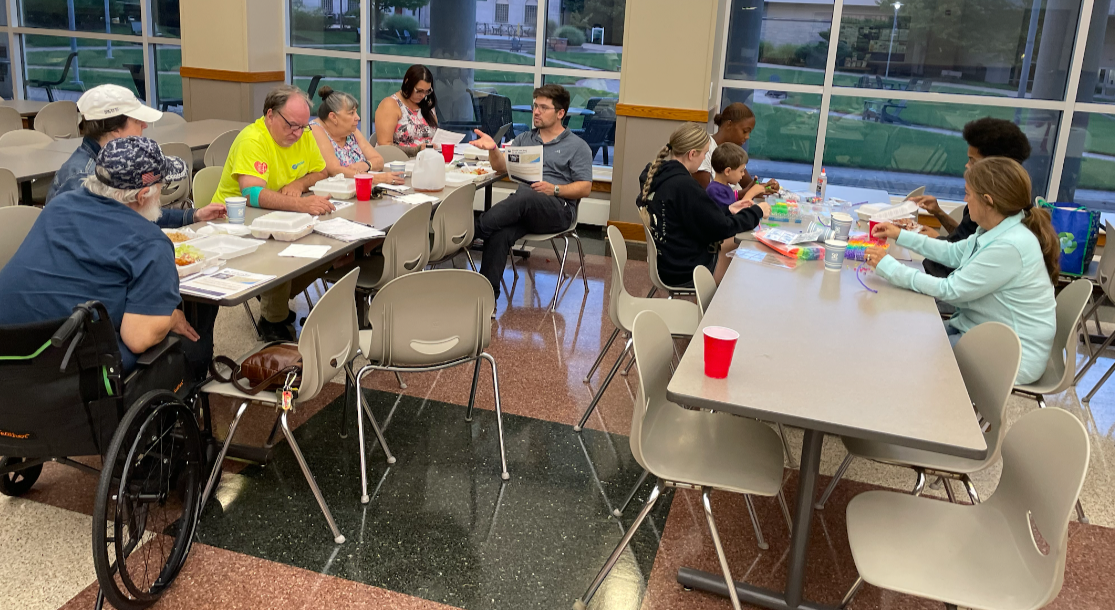
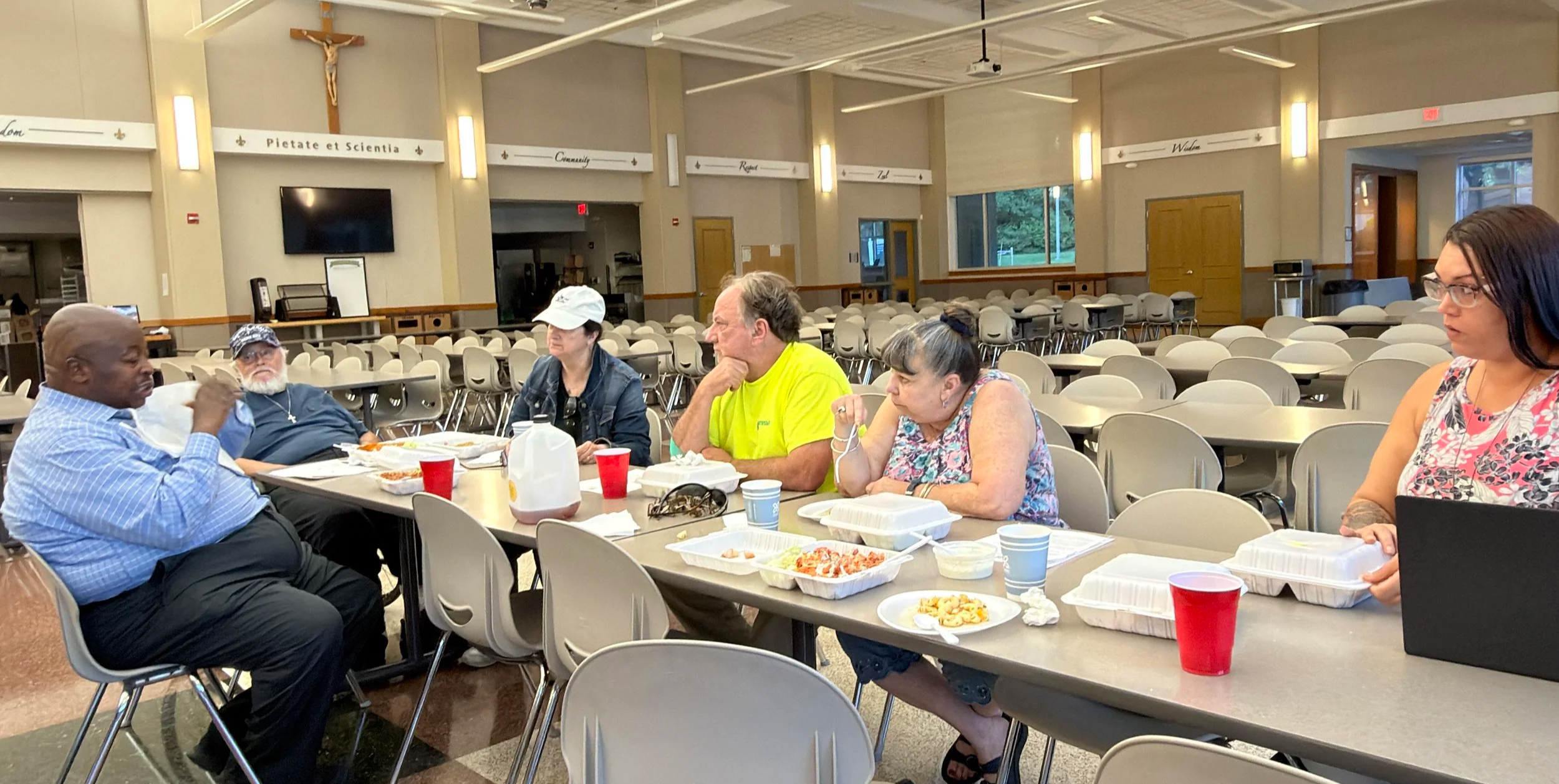
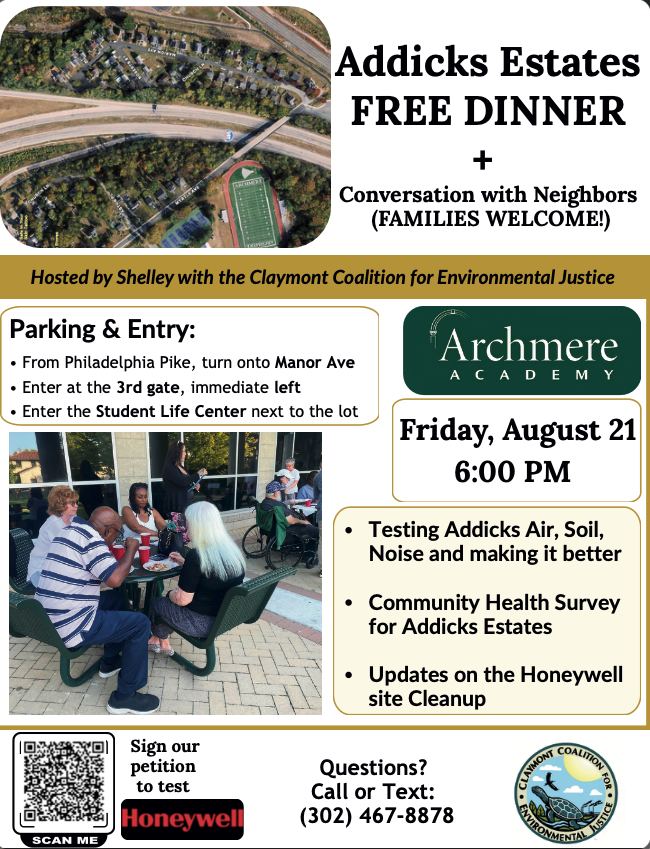
On August 21, Addicks Estates residents came back together over dinner to continue a conversation that started in July.
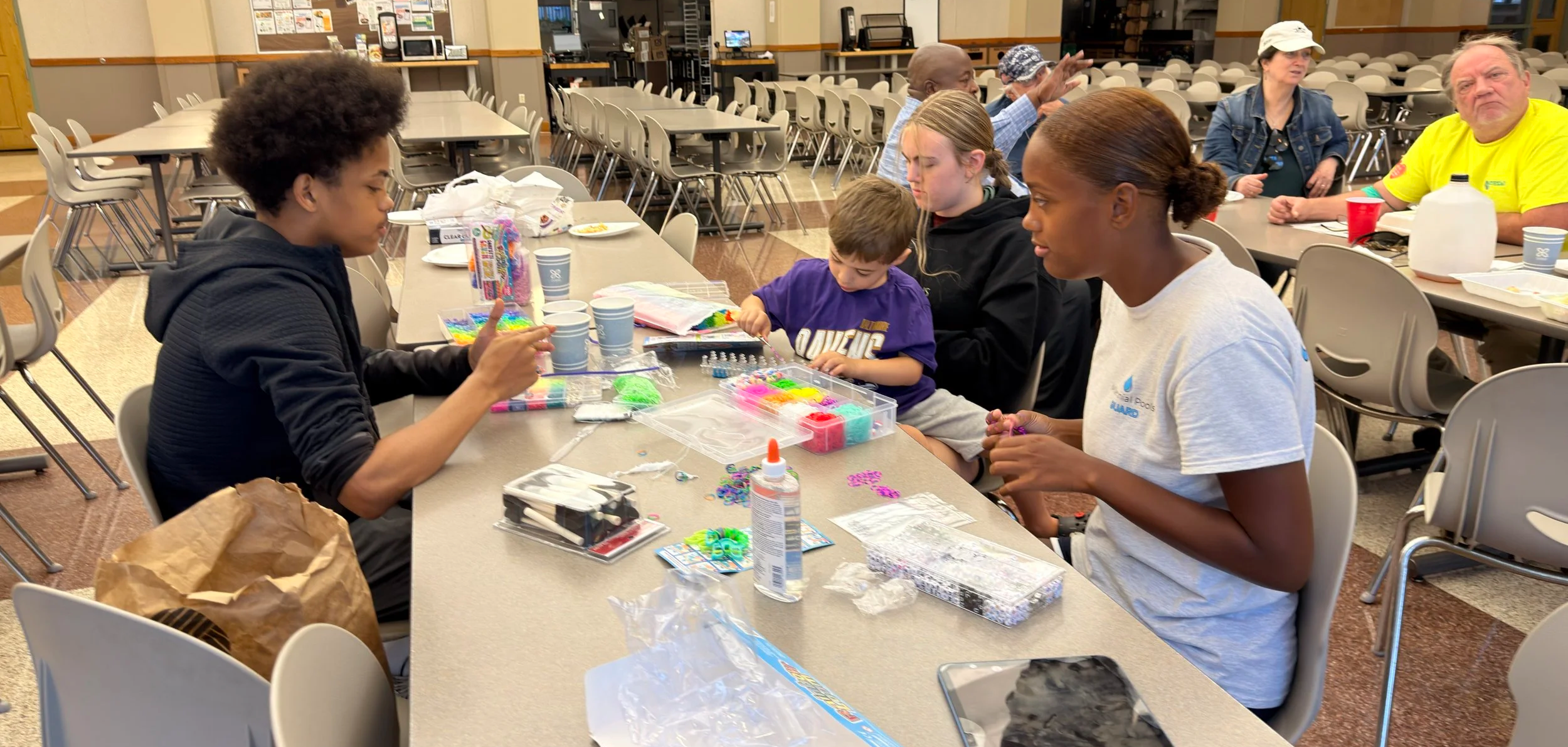
A huge thank you to NY Gyro & Grill in Claymont for providing dinner, JB’s Pop Up Kitchen for the tea, and the teen volunteers who made crafts with the younger kids while the adults talked.
In July, residents told us about truck noise, dust, air quality, concerns about what is in the ground, and questions about their health. This dinner was about reporting back on what we learned and deciding together what happens next.
Health Questions That Have Become Normal
Several residents noted how many neighbors and family members they know who have had cancer.
They wondered whether some health challenges that have come to feel like a normal part of life in the neighborhood could be connected to environmental exposures over the years.
We don't know the answer. That's exactly why residents are asking for better environmental and health information.
Residents were invited to anonymously write down one question they want answered about their health or their street.
Those questions will help guide what CC4EJ investigates and what we ask environmental and public-health agencies to answer.
Dust and Air Quality
Residents described dust as ever-present, coming from both redevelopment of the former steel mill property and nearby I-495.
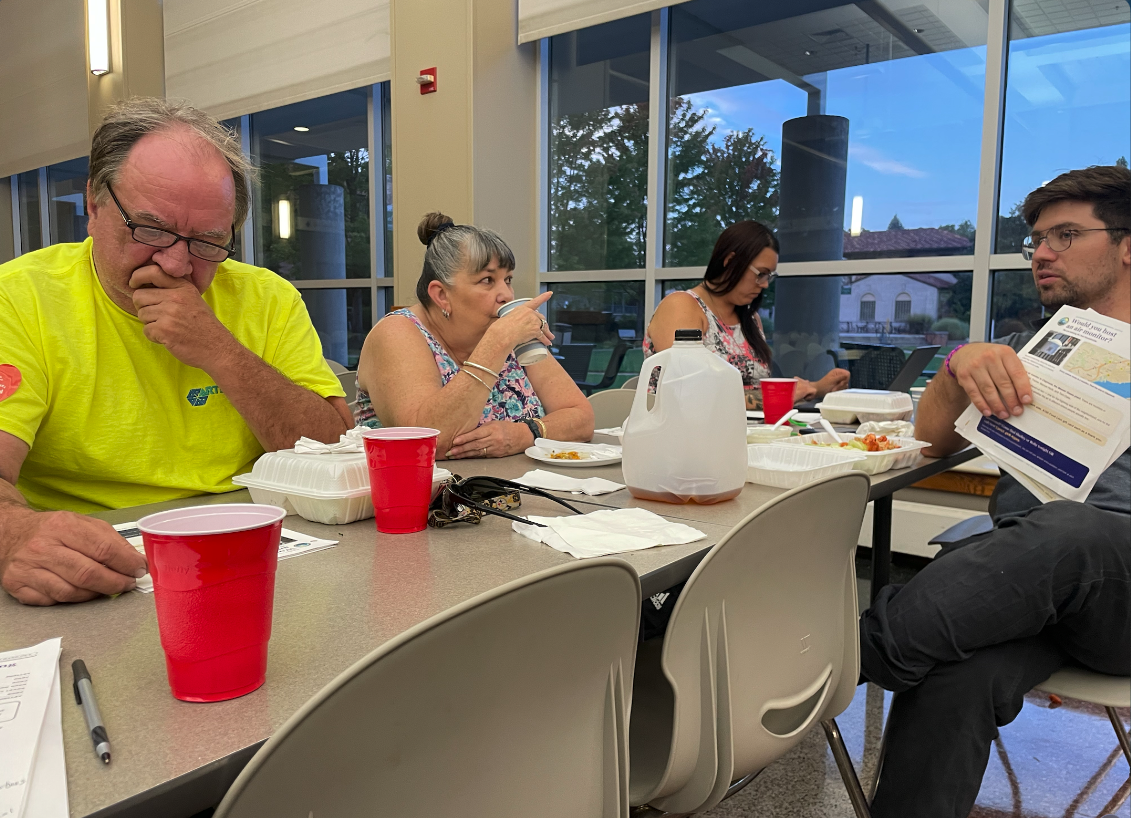
Claymont has a major gap in local air-quality monitoring. The network residents reviewed shows monitors in Boothwyn, Linwood, Trainer, Marcus Hook, and Twin Oaks, but none in Claymont.
The Clean Air Council offered CC4EJ two air monitors so we can begin measuring fine-particle pollution where people actually live.
Before the night was over, neighbors volunteered to host the monitors at their homes.
The monitors measure fine particles such as dust and soot. They do not measure radiation, gases, or odors, but they can help us build a long-term picture of what residents are breathing.
Two Possible Paths to Better Answers
CC4EJ has also collected 214 petition signatures calling for radiological testing at the former Allied Chemical/Honeywell site, showing that concern about the site extends well beyond a single meeting. Residents talked about two possible pathways for getting better information about environmental health in Addicks Estates.
First, CC4EJ will petition ATSDR, the health agency within CDC, asking for a community health assessment connected to the former Allied Chemical/Honeywell site. The first step would be reviewing existing environmental and health information. If the available data cannot answer important exposure questions, ATSDR can consider additional investigation, including environmental or human exposure testing.
We also discussed a possible community-wide environmental assessment through funding connected to EPA's Brownfields program and administered through DNREC. That could provide a pathway for testing soil, air, dust, and water across the neighborhood rather than focusing on a single property. CC4EJ is still learning whether the program fits Addicks Estates. There is no application, award, or testing date yet.
Both are possible futures. The goal is to move from residents having questions about their environment and health to having real information that can help answer them.
Who Gets a Say in Redevelopment?
Residents also discussed development on the former Claymont Steel property and a basic question:
Who gets a say before something gets built next door?
New Castle County reviews development plans as Major or Minor. Major plans receive a Planning Board public hearing where residents can speak. Minor plans can be approved administratively without that hearing.
CC4EJ is researching which process was used for projects on the former mill property and what opportunities Addicks Estates residents had to participate.
Truck Noise and Engine Brakes
Truck engine brakes remain another major quality-of-life concern.
Residents received log cards to document when and where the noise occurs. CC4EJ is asking DelDOT about signage and talking with New Castle County Police about what enforcement could look like.
One complaint can be easy to dismiss. A documented pattern across many households is harder to ignore.
What Happens Next?
Next Addicks Estates Dinner
Residents said they want to meet again in September.
CC4EJ will work with residents to confirm the date and share it as soon as possible. In the meantime, we’ll keep moving the action items from this meeting forward and report back on what we learn.
The dinner ended with several clear next steps:
Install the two air monitors residents volunteered to host and begin building a long-term picture of fine-particle pollution in Addicks Estates.
Continue the ATSDR petition as one possible path toward a community health assessment and, if existing information is not enough, further investigation of environmental exposures.
Explore a community-wide environmental assessment through DNREC and EPA Brownfields funding that could potentially support testing of soil, air, dust, and water across the neighborhood. We are still determining whether the program fits Addicks Estates.
Document engine-brake noise and continue pursuing signage and enforcement.
Keep investigating redevelopment of the former steel mill property, including how projects were reviewed and where residents had opportunities to participate.
Keep bringing residents’ health and environmental questions to the agencies responsible for answering them.
One resident also shared that she is going back to school for her master's degree in public health.
It was a fitting moment in a room full of people asking deeper questions about the relationship between their environment, their health, and the place they call home.