
What We Heard From EPA — and What Comes Next
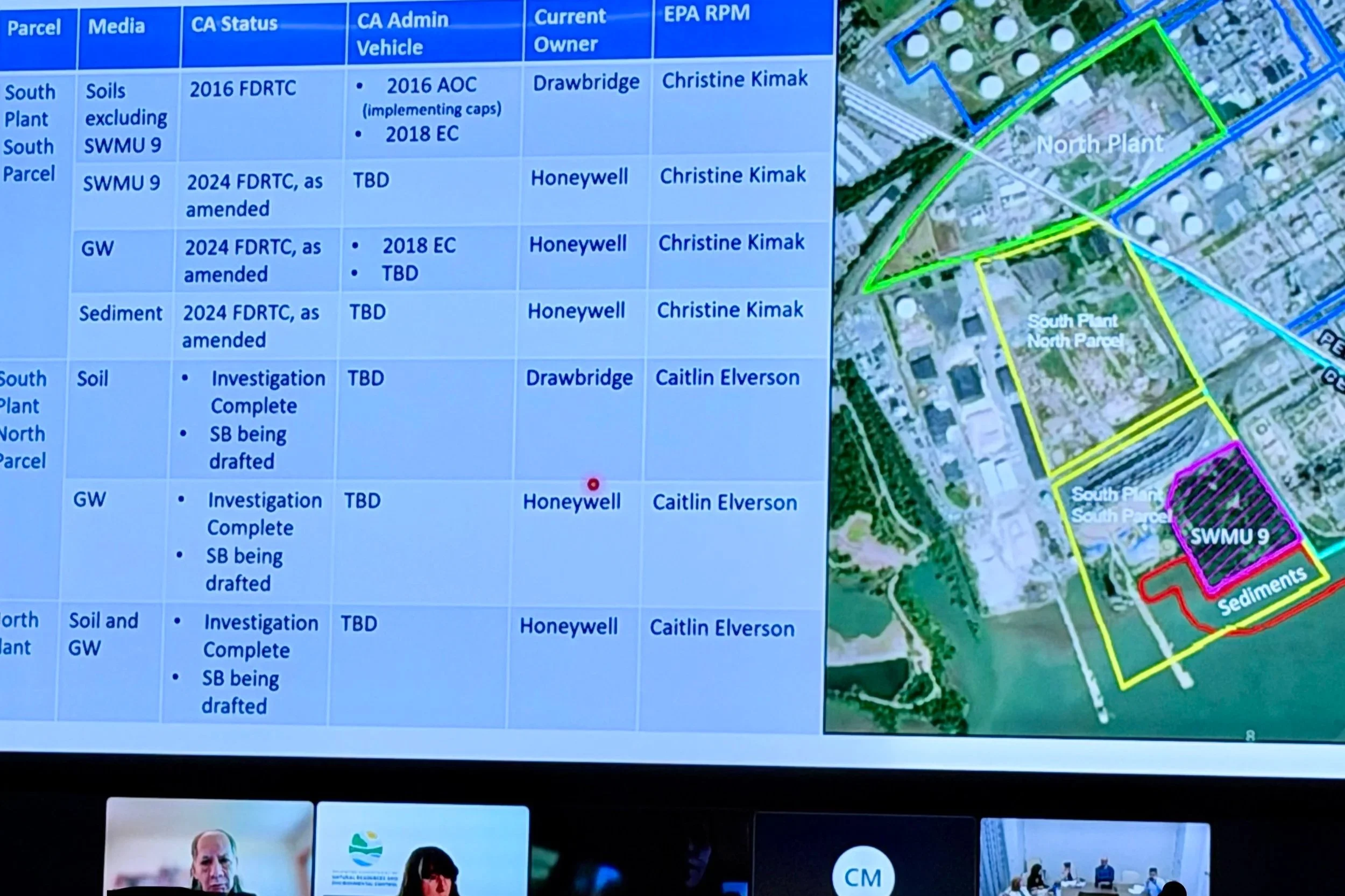
Thank you to the residents joined us virtually and in person. We are also grateful to former EPA employees for their support prepping our team and joining us in this meeting. Thank you to DNREC for joining our meeting.
On Monday, July 20, neighbors delivered our petition to the Environmental Protection Agency (EPA): test the old Allied Chemical site for radiation, show us the results, and clean up what's found. Nearly 200 of you have signed — and counting. Thank you. Those names are what we carried into that room. As promised, here's what we heard.
On the chemical cleanup: Part of the site is being covered with a protective cap — that work is partly done. Plans for the pond by the river, the groundwater, and the mud along the riverbank are still being worked out with Honeywell. EPA's own slides admit the ground and water there are still too polluted for people to live on. Next, EPA will propose cleanup plans for two more sections of the site — and when it does, we all get a chance to speak up. EPA said it will hold a public meeting if we ask. We will. And remember: when this community spoke up last year, EPA had to change one of its decisions. Speaking up works.
"There are more issues than radiation. Honeywell made acids, etc." — Lorraine Daliessio, lives less than a mile from the site
On radiation: EPA told us radiation is outside the scope of this cleanup, that it won't require testing, and that the Department of Energy owns the question. We thank EPA for meeting with us. We wish they had told us this sooner. We don't accept it as the last word.
Here's why. In seventy years, no one has ever tested this site for radiation. A federal health review says there is no record of any radiation survey at this plant: not while the work was going on, not before the buildings came down, not after.
In 1977, the Department of Energy looked at three Allied Chemical sites. Claymont was the only one where it found contamination could exist. It called the risk "so insignificant that further investigation... is not warranted" — and no one ever took a measurement.
Since then, the federal government has paid more than $366,000 for two workers from this plant, after its own scientists found radiation was at least as likely as not what caused their cancers. You can't call a site too insignificant to test while paying the people who got sick working there. Our families are not insignificant.
"All site should be tested." — Leroy Pfarner, lives less than a mile from the site
So we're not waiting for one agency to hand the question to another. We want to ask every agency with a key to use it:
Environmental Protection Agency (EPA): Ask in writing, under the Superfund law, for an assessment of radiation at this site — one that includes taking samples, not just reading old files.
The Agency for Toxic Substances and Disease Registry (ATSDA) — a federal health agency: Ask its scientists to study what our community may have been exposed to.
The Department of Energy (DOE): Formally ask DOE, with our members of Congress behind us if that's what it takes, to reconsider their 1980’s elimination from the Formerly Utilized Site Remedial Action Program (FUSRAP).
This has been done before. A former chemical plant in Queens, New York did work for the same 1950s weapons program. In the 1980s, the Department of Energy closed the file on both sites — ours with a report that repeated the 1977 conclusion, theirs with a letter saying it had no authority to clean anything up. Federal reviewers even doubted the contamination in Queens came from the weapons work at all.
It took time, but testing happened anyway. Radioactive material turned up in the soil and in the sewers, and in 2014 EPA put the site on the Superfund list. Since then, the tenants have been moved out, the buildings have come down, and crews have dug the contaminated soil out of the ground.
The difference is that someone eventually measured the Queens site. No one has ever measured ours.
Tell us what you think. These are our proposals, not final decisions. We want to hear whether you think this is the right path. Add your name or send us your story here.
If you or a family member worked at the plant:
Sick workers may qualify for $150,000 plus medical care from a federal program — families too. Whether you're covered depends on the years worked there, and the free helpline can tell you: 1-866-888-3322.
Reporters are asking to speak with neighbors who have a personal connection to the site. If you'd consider it, tell us. We'll explain what to expect first, and you can stop any time.
Or just talk to us: roby@cc4ej.org | 302.468.6329
How to help:
Add your name: "Our Families Are Not Insignificant" — everything past your name is optional, and you decide how we use your story
Want to get updates sent straight to your phone? Text HONEYWELL to 302-360-1118 to get added for free.
Watch this space for the comment period — we'll post it the day we see it
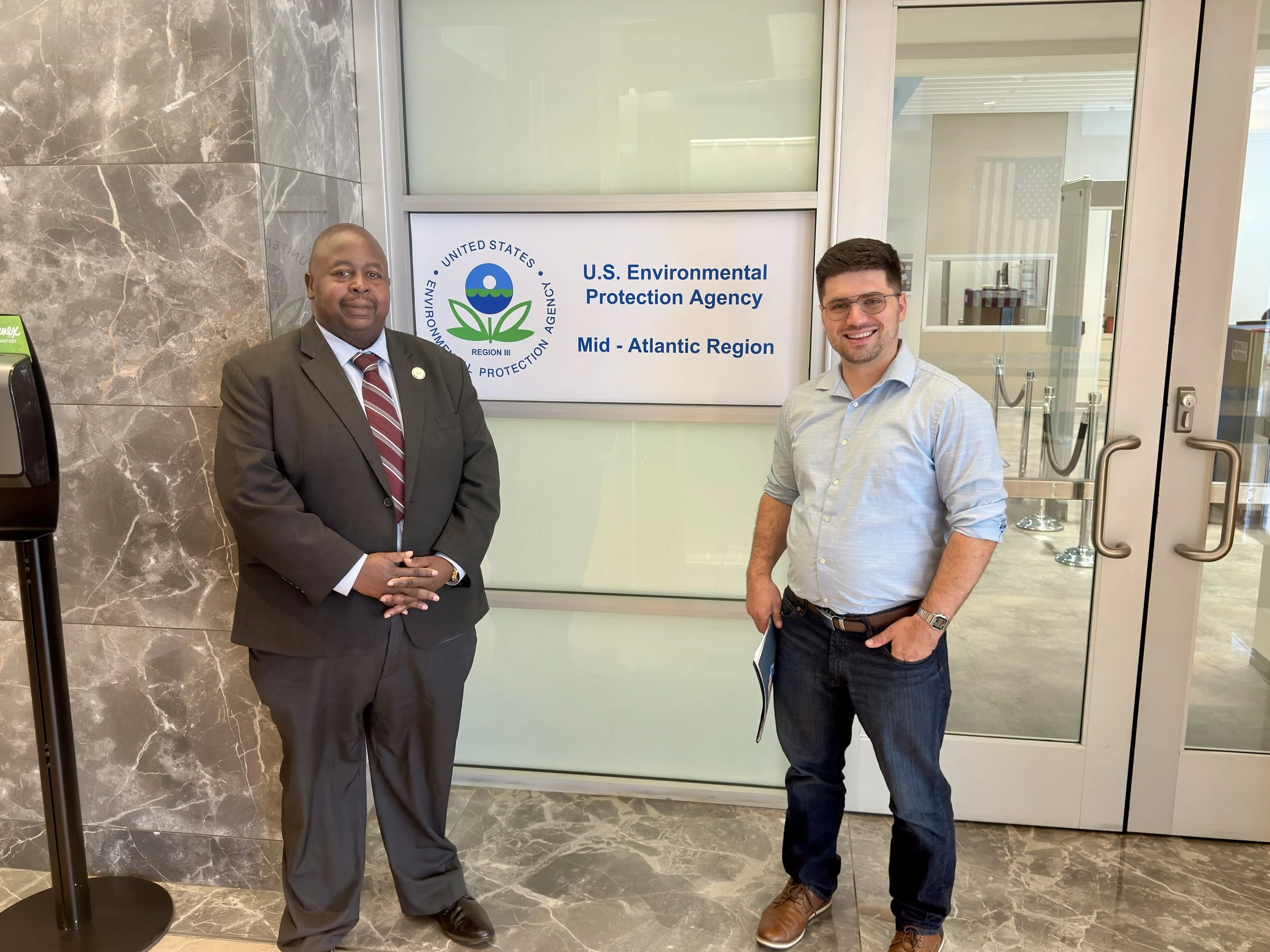
Pictured: State Representative Larry Lambert, a lifelong Claymont resident, and Roby Anstett of CC4EJ.
Not pictured: more neighbors who joined in the room and on the call, some of whom asked not to be photographed. That's theirs to decide.
Two of us are in the frame. This campaign is all of us.
We're not asking anyone to assume the worst. We're asking for a measurement and a straight answer.
